
DIGITAL MARKETING / UX STRATEGY / WEB DEVELOPMENT
Recipes as a Discovery Tool for Market Purveyors
How I turned a marketing challenge into a new way for local shoppers to discover Reading Terminal Market’s fresh-food merchants.
MY ROLE
Concept and solution proposed by me · Google Analytics research · Competitive research · UX wireframes · WordPress implementation (HTML/CSS)
PROJECT TIMELINE
Approximately 1–2 weeks
COLLABORATION
Business goal introduced by my Marketing Director · Existing recipes developed through a separate Community Development initiative with Jefferson
THE PROJECT AT A GLANCE
Make purveyors easier to discover.

THE PROBLEM
Prepared-food merchants dominated attention
Google Analytics showed more interest in certain ready-to-eat merchants than in the fresh-food purveyors we wanted to spotlight.

THE OPPORTUNITY
Reach local grocery shoppers
Position the Market as a one-stop shop for ingredients—not only a destination for prepared food.

MY SOLUTION
Turn recipes into a path to merchants
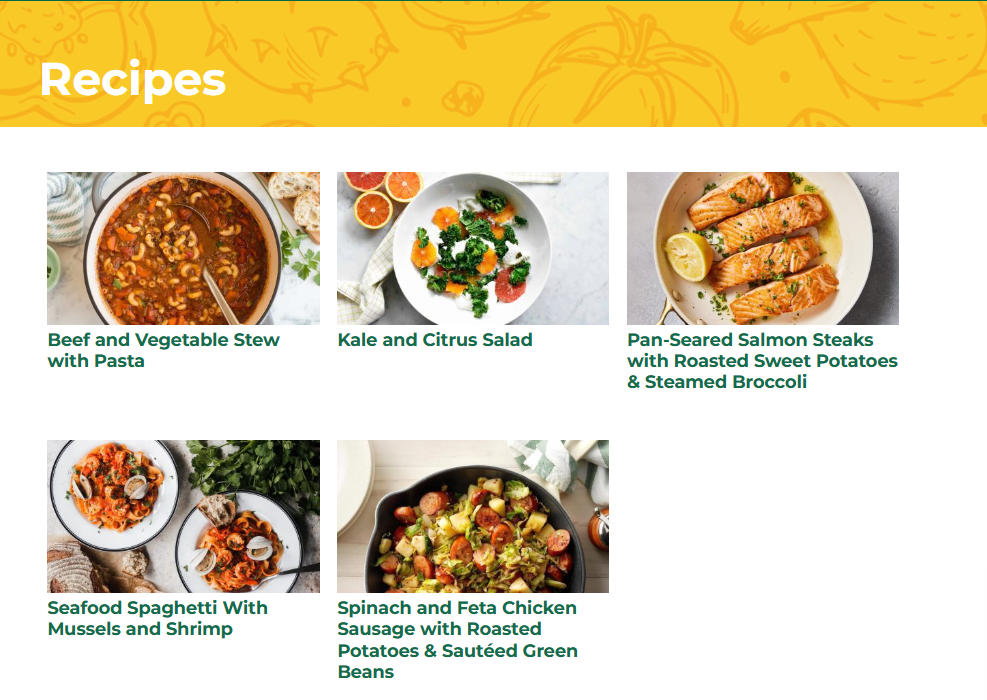
Create a dedicated recipe section where each dish gives visitors a reason to explore ingredients—and the Market purveyors selling them.
01. The Brief: Give Our Purveyors More Visibility
My Marketing Director introduced a larger business goal: increase attention for the Market’s purveyors. These businesses selling fresh ingredients are foundational to Reading Terminal Market, but they weren’t receiving the same online attention as some of our prepared-food merchants.
Our existing merchant directory listed everyone together. When I looked at Google Analytics, I noticed that prepared-food businesses, including examples like Uncle Gus’ Steaks, were among the more frequently visited merchant pages. Looking at visitor-location patterns also made me think about how we could better reach local Philadelphians shopping for ingredients.
I wanted to give purveyors their own reason to be discovered, rather than relying on visitors to scroll through a general directory.
02. Research: The Idea & Adapt the Purpose
I researched other public-market websites to see how they connected their merchants to the people shopping there. I came across Borough Market’s recipe content and recognized an approach that could support our own goal.
My idea was to give Reading Terminal Market a dedicated recipe section. Instead of simply telling visitors we were a one-stop shop, we could show them: choose a dish, see the ingredients, and find those ingredients at the Market.
THE CORE INSIGHT
Don’t make people search for a purveyor. Give them a reason to need one.
Recipe content could act as a bridge between inspiration and shopping—while creating a more natural way to discover the businesses we wanted to highlight.
03. UX to Launch: A Simple Solution in 1–2 Weeks
With my UX background, I started by drafting wireframes for a straightforward page that would fit the Market’s existing website. I didn’t want an elaborate redesign; the experience needed to feel familiar and make ingredients and merchant information easy to find.
I then built the recipe-focused experience in WordPress using HTML and CSS. The recipes themselves came from an existing Community Development initiative developed with Jefferson, so I could focus on turning that content into a useful digital experience instead of creating new recipes from scratch.
I designed the experience around three simple actions:
01 / DISCOVER
Choose a recipe
Find a dish that makes cooking at home feel approachable.

02 / CONNECT
See where to shop
Find the ingredients and links to purveyors that carry them.

03 / VISIT
Plan a Market trip
Use the recipe as a practical reason to visit the Market and shop with the merchants featured.
04. Outcome & What I’d Build Next
After the section launched, I observed increased views of purveyor pages in our website analytics.
The larger result was a new discovery route for purveyors: people could begin with something they wanted to cook and find a Market business connected to that need.
If I had more time and a larger recipe library, my next improvement would be recipe filters, such as vegan, seafood, or keto, to help visitors quickly find recipes relevant to their preferences. That would make the section more useful as it grew, while creating even more opportunities to discover merchants.
My takeaway: A good digital marketing solution doesn’t always require a large campaign. Sometimes it starts with understanding who isn’t being discovered, identifying an existing user need, and making one focused change to the website.
Explore more of my digital marketing and creative strategy work.

